 ARMY
ARMYYom Kippur War (1973): Egypt & Syria vs Israel
1973
On raw force balance, the model gives Israel a 59% edge. How that verdict held up against history — below.
The balance of forces
| Egypt & Syria | Israel | |
|---|---|---|
| 500,000 | Personnel | 375,000 |
| 3,000 | Tanks | 1,700 |
| 900 | Aircraft | 440 |
| ×0.95 | Quality factor (est.) | ×1.25 |
Surprise attack on a holy day, dense new Soviet SAM umbrella — versus — Veteran army caught unmobilized; reserves needed 48–72 hours.
What actually happened
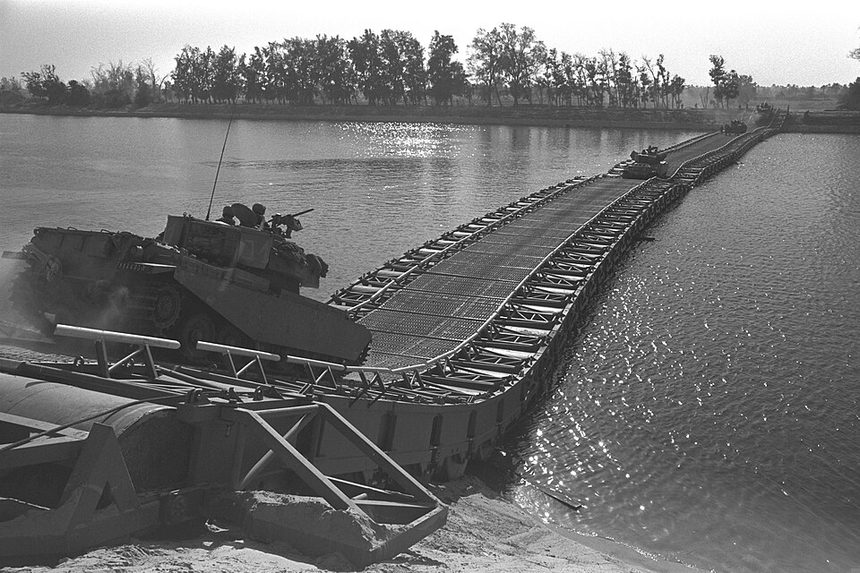
For 48 hours the numbers ruled: Egypt crossed the Suez Canal behind its missile shield and Syria overran most of the Golan. Then mobilization caught up. Israeli counterattacks crossed the Canal, encircled the Egyptian Third Army and reached 100 km from Cairo by the ceasefire on day 19. The war fits the model's near-parity verdict better than any other here — and it triggered a superpower nuclear alert in the process.
All scenarios
- Operation Barbarossa (1941): Germany vs USSR
- Pacific War (1941): Japan vs United States
- Invasion of Poland (1939): Germany vs Poland
- Battle of France (1940): Germany vs Allies
- Korean War Outbreak (1950): North vs South
- → All scenarios
Figures are approximate campaign-start estimates from open historical sources; the quality factor is our editorial assessment of doctrine and training. Compare these countries' modern armies in the simulator.