 ARMY
ARMYBattle of France (1940): Germany vs Allies
1940
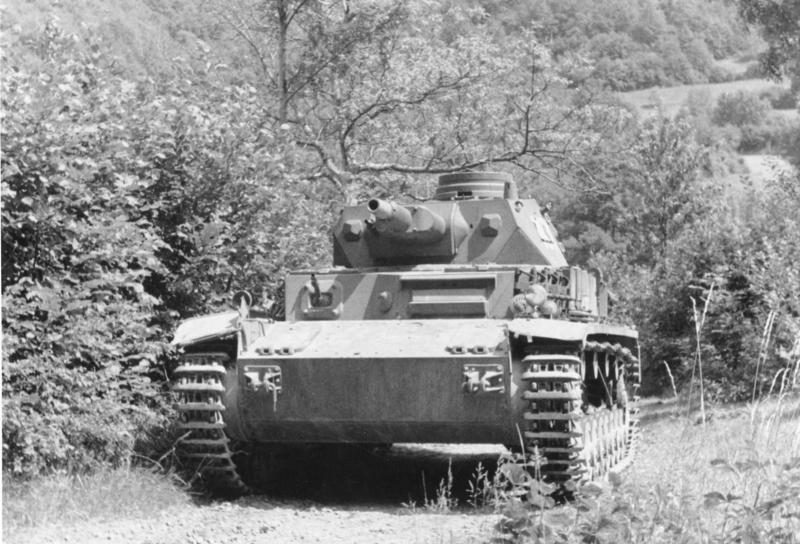
On raw force balance, the model gives Germany a 65% edge. How that verdict held up against history — below.
The balance of forces
| Germany | France, Britain & Benelux | |
|---|---|---|
| 3,350,000 | Personnel | 3,300,000 |
| 2,440 | Tanks | 3,380 |
| 3,600 | Aircraft | 2,900 |
| 7,400 | Artillery pieces | 14,000 |
| ×1.25 | Quality factor (est.) | ×0.85 |
Radio in every tank, armor massed in panzer corps, initiative-driven command — versus — Better tanks scattered as infantry support, 1918-style rigid command.
What actually happened
The Allies had more tanks — and better ones — plus more artillery and equal manpower. The model calls it even; reality took six weeks. The German thrust through the «impassable» Ardennes cut the Allied armies in two, and command paralysis did the rest. France 1940 remains the textbook proof that doctrine, tempo and command architecture can invert any static comparison of hardware.
All scenarios
- Operation Barbarossa (1941): Germany vs USSR
- Pacific War (1941): Japan vs United States
- Invasion of Poland (1939): Germany vs Poland
- Korean War Outbreak (1950): North vs South
- Six-Day War (1967): Israel vs Arab Coalition
- → All scenarios
Figures are approximate campaign-start estimates from open historical sources; the quality factor is our editorial assessment of doctrine and training. Compare these countries' modern armies in the simulator.