 ARMY
ARMYOperation Unthinkable (1945): Western Allies vs USSR
1945
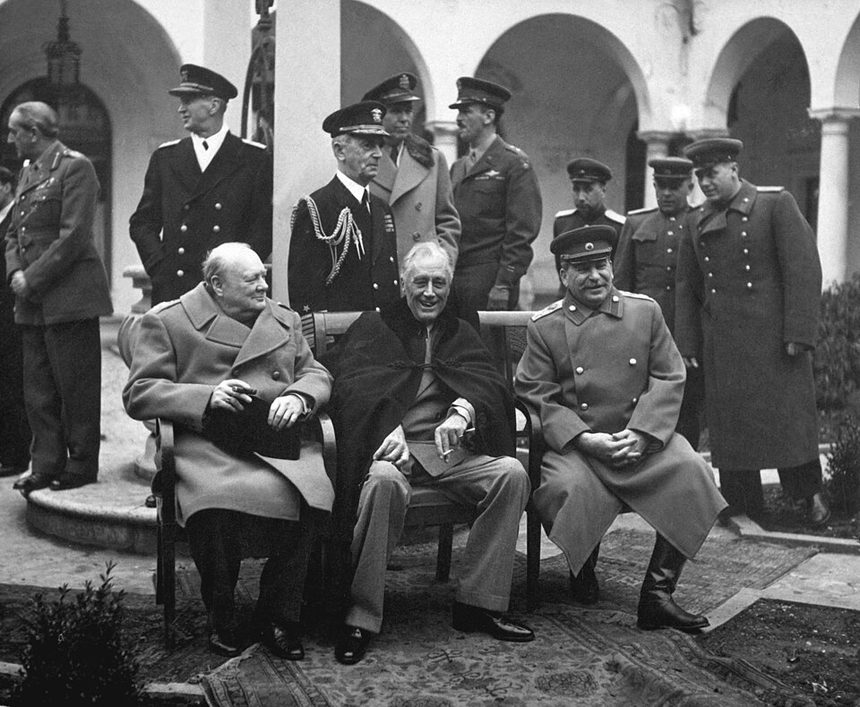
On raw force balance, the model gives USA, Britain & Allies (in Europe) a 51% edge. How that verdict held up against history — below.
The balance of forces
| USA, Britain & Allies (in Europe) | USSR (in Europe) | |
|---|---|---|
| 4,500,000 | Personnel | 6,500,000 |
| 11,000 | Tanks | 12,000 |
| 16,000 | Aircraft | 15,000 |
| ×1.15 | Quality factor (est.) | ×1.1 |
Strategic air power, atomic monopoly weeks away, naval supremacy — versus — The largest battle-hardened land army in history at its absolute peak.
What actually happened
Churchill actually ordered this plan drafted in May 1945. His own planners concluded what the model shows: no quick victory was possible against a Red Army with a three-to-two edge in divisions, and «total war» would be required with «no limit» to its length. The study was shelved, the armies demobilized, and the standoff it described hardened into the Cold War instead.
All scenarios
- Operation Barbarossa (1941): Germany vs USSR
- Pacific War (1941): Japan vs United States
- Invasion of Poland (1939): Germany vs Poland
- Battle of France (1940): Germany vs Allies
- Korean War Outbreak (1950): North vs South
- → All scenarios
Figures are approximate campaign-start estimates from open historical sources; the quality factor is our editorial assessment of doctrine and training. Compare these countries' modern armies in the simulator.