 ARMY
ARMYGulf War (1991): Coalition vs Iraq
1991
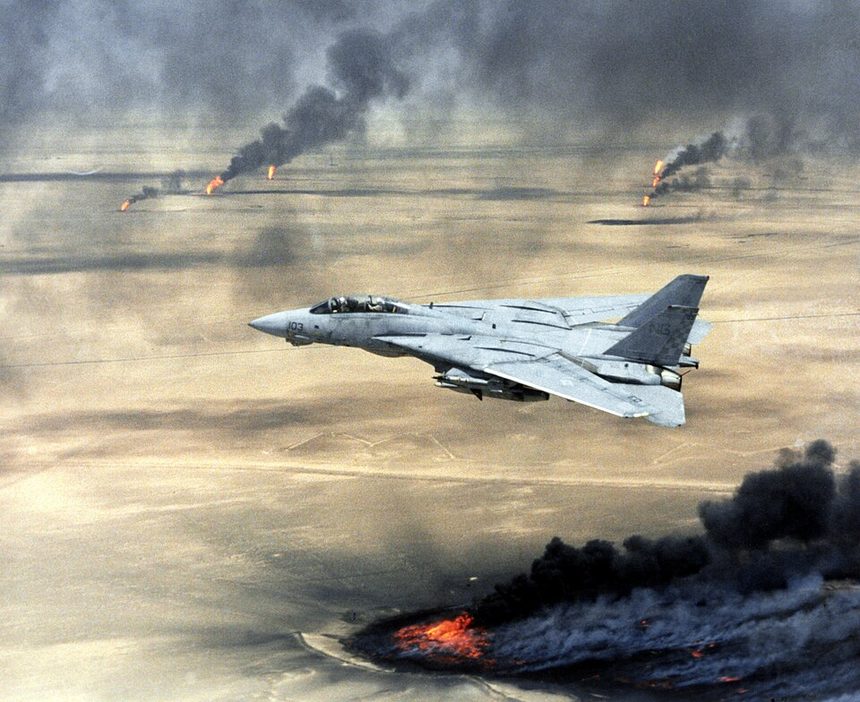
On raw force balance, the model gives US-led Coalition a 80% edge. How that verdict held up against history — below.
The balance of forces
| US-led Coalition | Iraq | |
|---|---|---|
| 956,000 | Personnel | 650,000 |
| 3,600 | Tanks | 4,200 |
| 2,250 | Aircraft | 700 |
| — | Artillery pieces | 3,000 |
| 100 | Warships | — |
| ×1.4 | Quality factor (est.) | ×0.7 |
Stealth, precision weapons, AWACS, GPS — a generation ahead — versus — Battle-worn conscripts, export-grade equipment, rigid Soviet-style defense.
What actually happened
Iraq fielded more tanks than the Coalition and the world's fourth-largest army; the model still picks the Coalition, and reality was faster than anyone predicted. Thirty-eight days of air campaign disassembled Iraqi command, then the ground war lasted exactly 100 hours. Coalition combat deaths were under 300 against tens of thousands of Iraqi. It became the reference case of what a technology generation gap does on an open battlefield.
All scenarios
- Operation Barbarossa (1941): Germany vs USSR
- Pacific War (1941): Japan vs United States
- Invasion of Poland (1939): Germany vs Poland
- Battle of France (1940): Germany vs Allies
- Korean War Outbreak (1950): North vs South
- → All scenarios
Figures are approximate campaign-start estimates from open historical sources; the quality factor is our editorial assessment of doctrine and training. Compare these countries' modern armies in the simulator.