 ARMY
Falklands War (1982): United Kingdom vs Argentina
1982
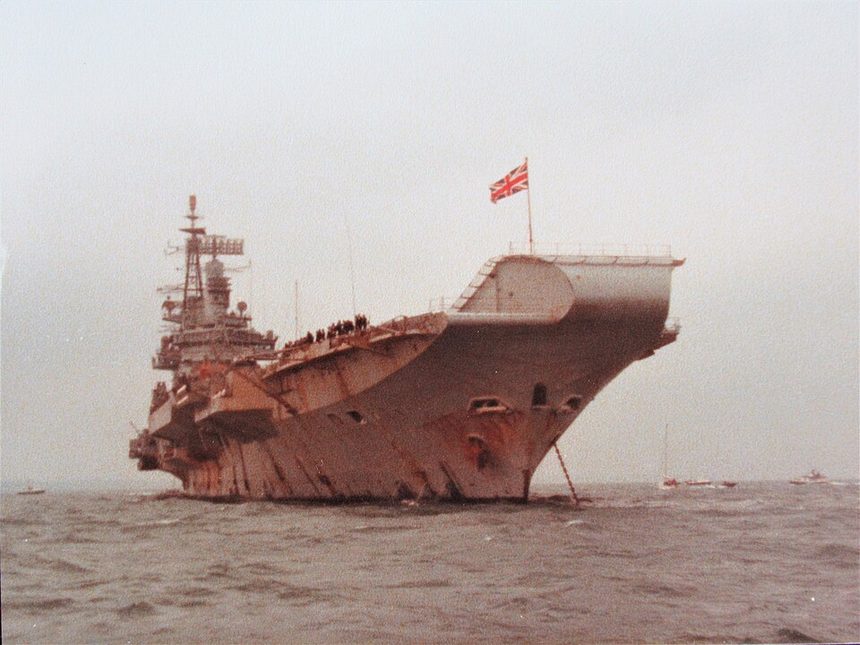
On raw force balance, the model gives United Kingdom a 68% edge. How that verdict held up against history — below.
Historical context
The Falklands, a windswept British colony of 1,800 people in the South Atlantic, had been claimed by Argentina since the 1830s. In 1982 Argentina's military junta, facing economic collapse and mass protests, gambled that seizing 'las Malvinas' would rally the nation — and that Britain, which had been scrapping carriers and planned to withdraw its last Antarctic patrol ship, would accept the fait accompli. On April 2, Argentine marines overwhelmed the islands' 68 Royal Marines. Thatcher's government instead assembled a naval task force within a week and sent it 13,000 kilometers south.
The balance of forces
| United Kingdom | Argentina | |
|---|---|---|
| 28,000 | Personnel | 13,000 |
| 0 | Tanks | 0 |
| 42 | Aircraft | 220 |
| 65 | Warships | 35 |
| ×1.3 | Quality factor (est.) | ×0.85 |
Professional force, nuclear submarines, Sea Harriers with new AIM-9L — versus — Conscript garrison, capable pilots operating at extreme range.
Course of the campaign
The war was fought at the edge of both sides' reach. A British submarine sank the cruiser General Belgrano, confining Argentina's navy to port; Argentine pilots answered with Exocet missiles and daring low-level raids that sank the destroyer Sheffield, two frigates and the container ship carrying most of the task force's helicopters. The landing at San Carlos on May 21 survived days of air attacks, and British infantry then marched across the island to storm the ring of hills around Stanley in night battles. The garrison surrendered on June 14. The defeat brought down the junta within days — democracy returned to Argentina the next year.
What actually happened
Fought 13,000 km from Britain, the war hinged on two asymmetries the model can only gesture at: the submarine threat that locked the Argentine navy in port after the sinking of General Belgrano, and 21 Sea Harriers that shot down over 20 jets without a single air-to-air loss. Argentine pilots still sank six British ships. The islands were retaken in 74 days.
All scenarios
 1941Operation Barbarossa (1941): Germany vs USSRGermany & Axis allies vs USSR (western districts)
 1941Pacific War (1941): Japan vs United StatesEmpire of Japan vs United States
 1939Invasion of Poland (1939): Germany vs PolandGermany vs Poland
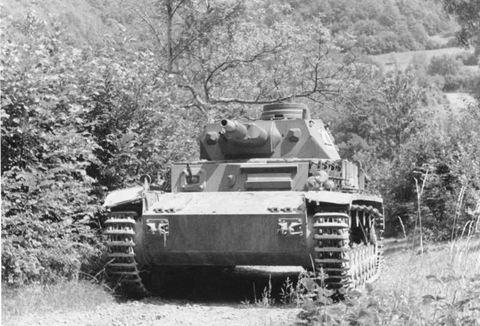 1940Battle of France (1940): Germany vs AlliesGermany vs France, Britain & Benelux
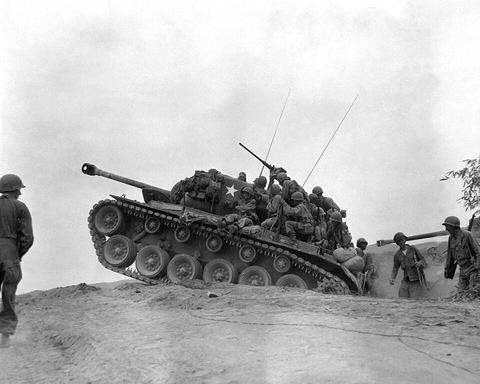 1950Korean War Outbreak (1950): North vs SouthNorth Korea vs South Korea
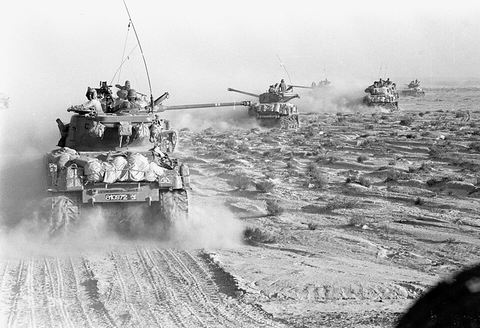 1967Six-Day War (1967): Israel vs Arab CoalitionIsrael vs Egypt, Syria & Jordan
Figures are approximate campaign-start estimates from open historical sources; the quality factor is our editorial assessment of doctrine and training. Compare these countries' modern armies in the simulator.